




Preparing UK SMEs for the nationwide analogue switch-off
The way Businesses communicate is changing
By January 2027, the UK’s traditional copper phone network will be permanently switched-off. This network has supported landlines and analogue services for decades, but it’s now being retired in favour of modern, digital alternatives.
The PSTN is no longer fit for today’s business environment. It’s increasingly unreliable, expensive to maintain, and unable to support the speed, resilience and flexibility organisations now expect. As a result, providers have stopped investing in copper infrastructure and are moving to all‑IP, fibre‑based networks instead.
Many UK businesses still rely on analogue lines to support services such as broadband, alarms, lift lines, payment terminals and security systems. That’s why it’s important for organisations to thoroughly review their full estate and identify any services still dependent on PSTN before the deadline.


We’re trusted by



Watch the Great Switch-off: Beyond the dial tone
Catch up with our experts Lee Johnson (Air IT Group) and Claire Makin (Giacom) in this short, 30‑minute educational session exploring the PSTN switch‑off and what it really means for UK businesses.
Key topics discussed in the webinar:
• What’s changing with the PSTN — and why
• Key actions made my UK providers
• Which business services are most at risk
• Modern alternatives


Alternative modern solutions
As PSTN is retired, businesses must move to modern, digital‑first connectivity and voice solutions that remove reliance on analogue lines and support the way teams work today.
-
SOGEA
Overview
Benefits
Delivered over a single broadband connection, SOGEA (Single Order Generic Ethernet Access) provides high-speed, reliable internet without the need for a traditional phone line.
It’s a cost-effective solution for small businesses. Get stable connectivity for everyday operations, such as email, web browsing, and telecommunications.
-
FTTP (Fibre to the Premises)
Overview
Benefits
Using full fibre connections delivered directly to your premises, FTTP (Fibre to the Premises) provides ultra-fast, symmetrical speeds for high-performance connectivity.
Ideal for businesses that rely on video conferencing, large data transfers, or cloud-based applications, FTTP ensures seamless, consistent performance.
-
Leased Lines
Overview
Benefits
Leased lines offer dedicated, uncontended internet access with guaranteed bandwidth and symmetrical speeds for organisations where uptime and performance are non-negotiable.
With a robust Service Level Agreement (SLA) and guaranteed performance, leased lines provide businesses with ultimate peace of mind, ensuring always-on connectivity.
-
AIR Teams Talk
Overview
Benefits
Turn Microsoft Teams into a fully functional phone system with AIR Teams Talk. Direct Routing enables external calling directly from Teams. Collaborate and connect with clients on a single platform.
Simpler communication, reduced costs, and no need for separate phone systems.
-
AIR Hosted Voice
Overview
Benefits
Bring together voice, video, messaging, and collaboration with AIR Hosted Voice with Webex. This secure, cloud-based platform supports hybrid working and scales easily as your business grows.
Reliable, all-in-one communication with free calls that keeps your bills low and your people connected wherever they are.
Start Preparing for the PSTN Switch‑off
The PSTN switch‑off is no longer in the distant future. For organisation that still need to upgrade, it’s important to start preparations now. The earlier you review your setup, the more control you have over the transition, avoiding disruption, rushed decisions and unnecessary cost.
For most organisations, the challenge isn’t choosing a solution straight away. It’s knowing where to start, what to review, and how to plan the move in a structured way. That’s why a clear, phased approach is so important.
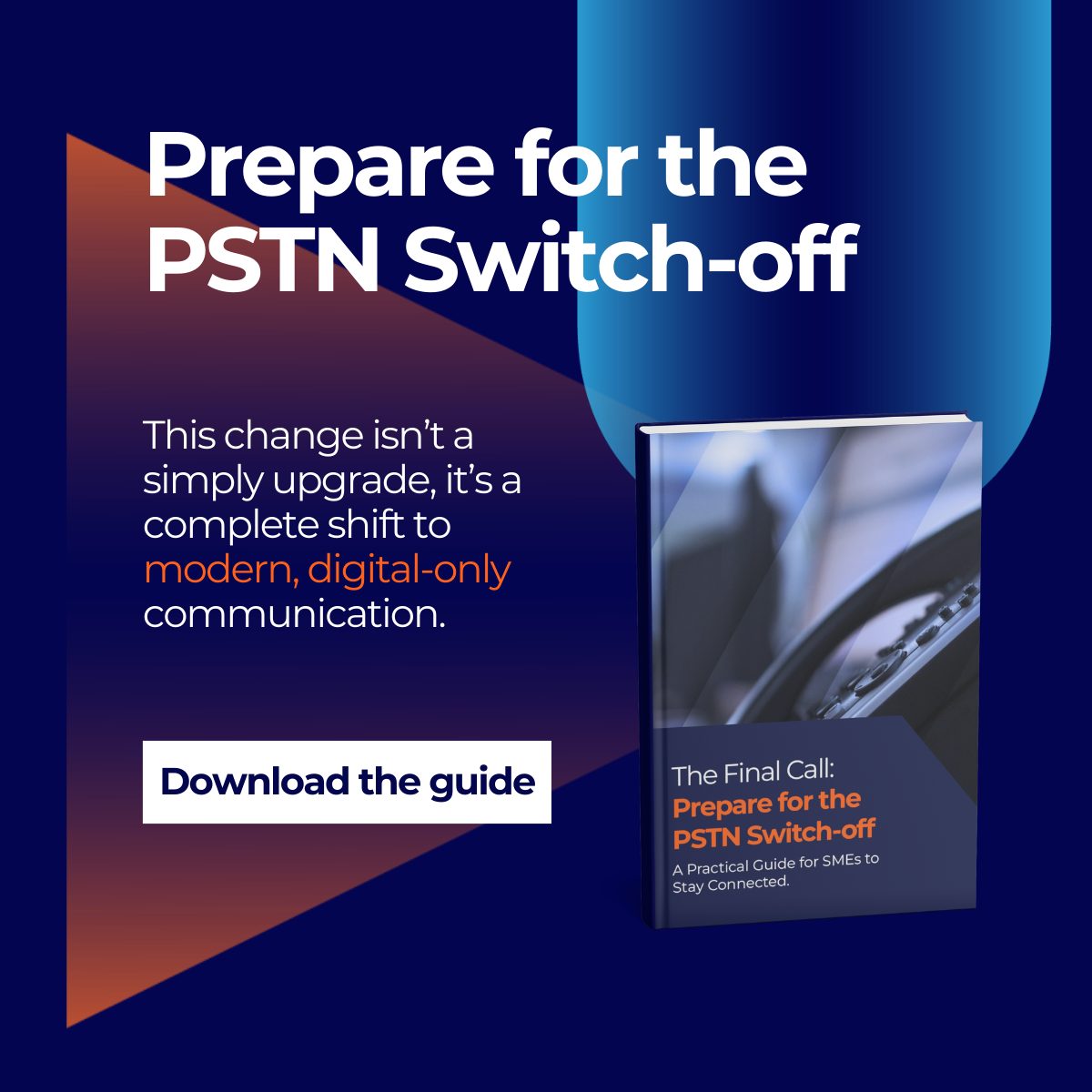
Our practical PSTN guide is designed to help you take that first step with confidence. Inside, you’ll find a 30, 60 and 90‑day checklist that walks you through what to review, when to act, and how to prepare your organisation for a smooth move to modern voice and connectivity. It helps you uncover hidden PSTN dependencies, prioritise critical services, and plan upgrades in a way that minimises risk and disruption.
Frequently asked questions
The deadline was extended to January 2027 to allow more time for businesses and providers to safely migrate critical services, such as alarms, lift lines and telecare systems. The extension helps reduce the risk of disruption while these dependencies are identified and upgraded.
PSTN services are still being withdrawn, new analogue lines are no longer sold, and the network continues to become less reliable, so businesses are still encouraged to act early.
The right solution depends on your current setup, risk profile, and how your teams work. Options may include full fibre, SoGEA, leased lines, cloud‑based telephony or Microsoft Teams voice, often combined with backup connectivity for resilience. A review of your existing services is the best way to determine the right fit.
These are some of the most commonly overlooked PSTN‑dependent services. Alarms, lift emergency phones, door entry systems, EPOS equipment, CCTV backhauls and monitoring equipment may still rely on analogue lines. If not upgraded in time, they may stop working when PSTN is switched off, which can introduce safety and compliance risks.
Yes, it can. Many older broadband services, such as ADSL and FTTC, rely on PSTN copper lines. When these lines are withdrawn, affected broadband services will also need to be upgraded to alternatives like SoGEA or full fibre (FTTP). If you’re unsure how your broadband is delivered, it’s important to review this early.
This depends on the size of your organisation, the number of PSTN‑dependent services you have, and the connectivity options you choose. For many SMEs, migration can take several weeks to a few months. That’s why a phased approach, such as a 30/60/90‑day plan, is highly recommended.
Any services still running on PSTN when the network is withdrawn will simply stop operating. This can lead to service disruption, downtime, and urgent reactive replacements. Acting early gives you more choice, more time to plan, and significantly reduces the risk of last‑minute disruption or increased costs.
We’re on hand to answer your questions
Can’t find the answer you’re looking for?

Other Services


From an expert’s perspective
Get a free consultation