




Identity Attacks: The Biggest Cyber Threat to UK SMEs
Insights
Cyber Security
Charlotte Lewis

min read
Back
Why Identity Threat Detection and Response (ITDR) matters more than ever
Cyber-attacks against UK SMEs have changed. Attackers are not trying to batter firewalls anymore. They log in using real usernames and passwords. That tactic is cleaner, quieter and significantly more effective.
The latest Microsoft Digital Defense Report spells out the scale of the shift. In the first half of 2025, identity-based attacks increased by 32 percent. That is not a marginal rise, it shows attackers have found a method that works.
If your business relies on Microsoft 365, Teams, SharePoint or any cloud platform, this change is not theoretical. Your accounts are the target.
What are identity attacks?
An identity attack involves a criminal using legitimate login details. They impersonate a real employee, then operate inside your systems as if they belong there. There is no malware signature and no firewall spike. They simply log in.
How do they get credentials?
- Phishing emails trick staff into sharing details.
- Passwords appear in leaked databases.
- MFA fatigue prompts users to approve fake login requests.
- Session tokens are stolen or replayed to bypass passwords entirely.
- Some credentials are bought cheaply on criminal marketplaces.
Once inside, attackers read email, access files, impersonate staff, move money, deploy ransomware or quietly prepare a larger compromise. Because they use real credentials, traditional tools treat this activity as normal.
Identity is targeted because it is reliable. It is silent. It almost never triggers legacy alerts.
Why traditional tools miss identity attacks
Most SMEs already invest in antivirus, firewalls, email filtering and endpoint protection. These remain important, but they were built for malware detection, not identity misuse.
A criminal using a valid username and password looks like a normal employee. A login from a remote country and a login from the UK are treated the same if the credentials are accepted. This is the blind spot attackers exploit.
Token theft makes this worse. Microsoft reports a rise in token replay attacks, where criminals steal a session token so they never need a password or MFA code. Most SMEs can’t detect this because their tools weren’t designed for it.
How ITDR closes the gap
Identity Threat Detection and Response is not another buzzword. It is a security layer built specifically to protect the most targeted asset in your business. Your users.
ITDR monitors who is logging in, from where, on what device, at what time and what they are doing after authentication. It looks for suspicious or abnormal behaviour. If something is off, it can challenge the login, force reauthentication, suspend the session or automatically block the attacker.
Attackers try to blend in by mimicking staff behaviour – copying login times, device types and navigation patterns. Legacy tools can’t spot this. ITDR analyses deeper signals like impossible travel, mismatched devices, unusual movement within cloud apps or repeated failed logins from multiple locations.
In short, ITDR exposes identity misuse, not just malware.
Why identity protection is critical for UK SMEs
SMEs depend heavily on cloud services like Microsoft 365, Xero, CRM systems and supplier portals. These systems are available anywhere, which increases flexibility but also increases exposure.
A single stolen Microsoft 365 identity can unlock everything. Email, SharePoint, OneDrive, Teams, financial approvals and supplier communication. The cloud makes identity the core point of trust and attackers exploit that.
Microsoft’s data indicates that more than 70 percent of SME breaches start with a compromised identity. This aligns with industry trends across the board. It is why identity security now matters more than traditional perimeter controls.
“Many modern attacks involve no malware at all. Criminals never touch a firewall and never trigger traditional alerts. They use real login credentials and operate unnoticed. When identity becomes the new perimeter, identity must be monitored and protected with the same seriousness previously placed on the firewall.”
Essential Cyber Security layers for SMEs
A strong security posture still needs multiple layers:
- MFA
- Strong passwords
- Dark web monitoring
- Endpoint protection
- Email security
- Patching
- Backups
- Staff training
- Incident response planning
ITDR is the missing layer that closes the identity blind spot. Without it, you monitor for malware but not the login behaviour attackers exploit. This is the equivalent of locking your doors while leaving your keys on the doorstep.
Why specialist cyber expertise matters
Identity security is complex. It requires knowledge of cloud identity architecture, conditional access, Microsoft 365 monitoring information, attack patterns and real-time response. Expecting general IT staff to manage this alongside other tasks isn’t realistic.
Our dedicated cyber security team focuses on identity protection, ITDR deployment and monitoring, threat hunting, incident response, Microsoft 365 hardening and vulnerability management. This expertise is essential because identity is now the most exploited route into SME environments.
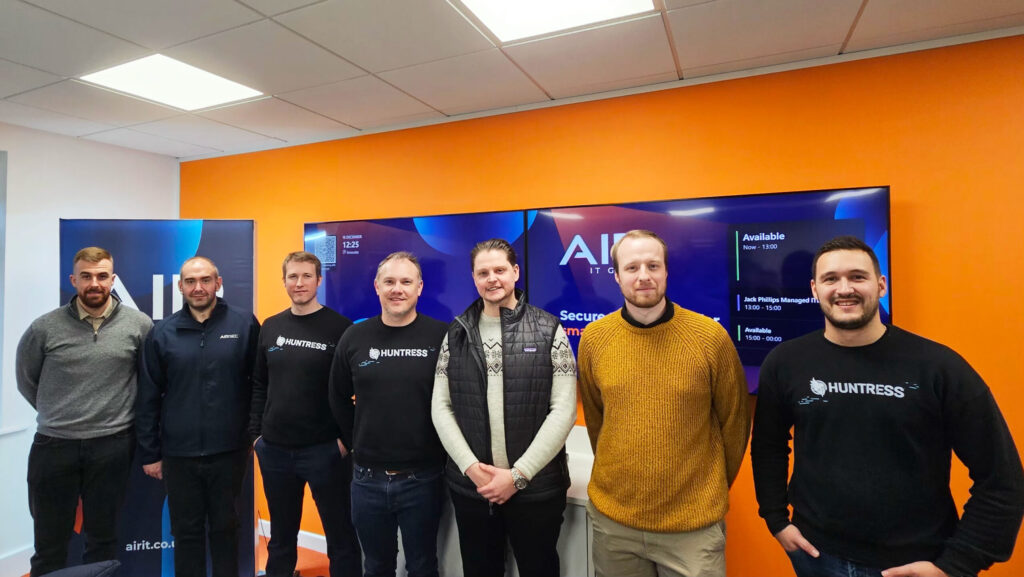
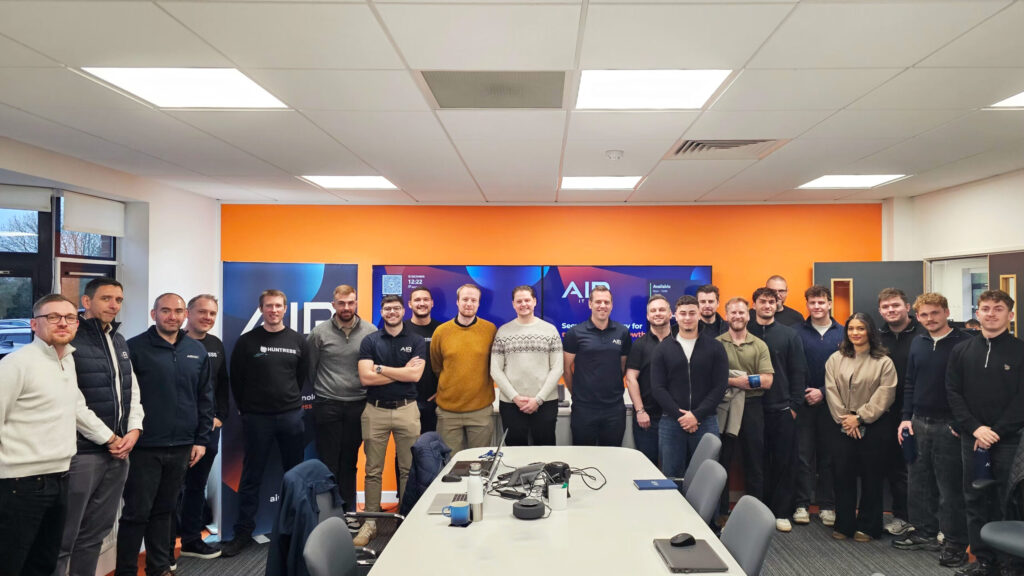
We also invest heavily in continuous skills development. Recently, our sales team and Air Sec team came together for dedicated ITDR training alongside Huntress, strengthening a shared understanding of identity-based attack techniques, detection methods and real-world response scenarios. This ensures our teams remain aligned, current and well-prepared to protect customers as identity threats continue to evolve.
Strengthen your SME’s cyber resilience now
Identity attacks are the simplest and most effective method for criminals to compromise UK SMEs. Identity Threat Detection and Response is the most reliable way to detect those attacks early and stop them before damage is done.
If you want to understand your current exposure, assess your Microsoft 365 identity posture or evaluate whether Identity Threat Detection and Response is right for your business, our specialists can guide you with clear, practical advice.
Get a free consultation
You may also be interested in

Data & AI
Insights
Insights
Autumn Budget: Using Automation & AI To Do More With Less
04/12/2025
Cyber Security
Insights
Lessons Learned from the CrowdStrike Global IT Outage
26/07/2024

Cyber Security
Insights
‘Does ISO 27001 Require Pen Testing?’ and Other Questions
16/10/2024